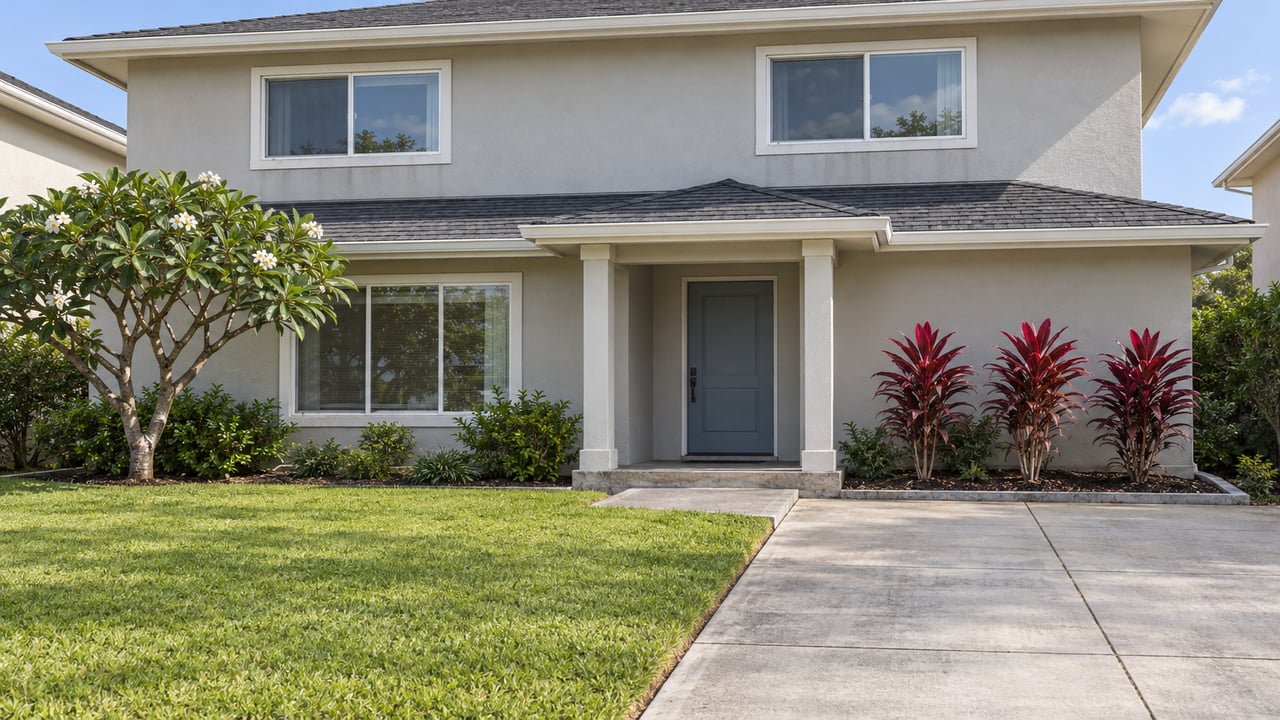
Who Pays for the Pavement? Why Two Villages of Kapolei Homes Can Carry Different Road Costs
October 22, 2026
October 22, 2026
The Villages of Kapolei Association dues page is short. It lists a single base assessment of $62 a month starting January 1, 2026. Below that are four street names, each with its own monthly charge. Then comes one bolded line: "As of September 2026, the Road Assessments will resume."
A listing usually shows one association figure. In the Villages, the cost of owning a particular house also depends on which street it sits on and who is responsible for that pavement. In 2026, the three parties responsible for Villages pavement are headed in different directions.
The association, known as VOKA, lists these private road assessments alongside its base dues:
| Street or village | Private road assessment | Combined with $62 VOKA dues |
|---|---|---|
| Nehoa, in Kumuiki | $31.50/month | $93.50/month |
| Malanai | $65.31/month | $127.31/month |
| Kekuilani Palms I & II | $55.00/month | $117.00/month |
| Iwalani | $5.00/month | $67.00/month |
The right-hand column is simple addition and still isn't the full monthly figure. VOKA tells owners that "sub-associations often have their own maintenance fees which are different and independent of VOKA dues." A Malanai home and an Iwalani home pay the same $62 to VOKA, but before any sub-association fee their road charges differ by more than $60 a month.
These charges also have no fixed end date. The association says the private road assessments "will continue until projects are fully funded." Its First Quarter 2026 newsletter explains why that matters. General Manager Eric J. Kuewa wrote that contractor bids for the cluster driveway resurfacing project "are higher than the reserve amounts currently on hand," and that the board "will need to decide on the path forward as to how to collect the balance due on the project." The newsletter named Kekuilani as the first village to start and set a town hall for February 6, 2026, at Recreation #1. VOKA's Kekuilani driveway project page sends owners to the association's Vantaca portal for the detailed schedule and the list of affected addresses. A buyer who isn't yet an owner can't see those pages.
To see why one street carries a charge and the next one doesn't, start with who built the community. The Hawaiʻi Housing Finance and Development Corporation, HHFDC, was the master developer of the Villages of Kapolei under Act 15 of 1988. It used exemptions from state and county planning and zoning rules to speed up construction. Decades later, responsibility for the paved surfaces is split three ways:
The dedication plan HHFDC approved in 2026 deals with the first of these.
At its February 12, 2026 meeting, the HHFDC board approved an agreement covering maintenance, operation, and dedication of Villages of Kapolei infrastructure to the City and County of Honolulu. The board also approved a $60 million budget from the Dwelling Unit Revolving Fund, to be paid to the City over ten years. The meeting minutes record that the payments start at $10 million for each of the first two years and then decline. HHFDC Executive Director Minakami said the goal is to transfer infrastructure ownership and future maintenance to the City, which is expected to save the agency about $10 million a year.
The handover isn't finished. In HHFDC's August 13, 2026 status report, the agency said that as of July 2026 it and the City were still finalizing the agreement's remaining provisions and exhibits with legal counsel. A roadway rehabilitation contract with R.M. Towill Corporation remains on hold until the agreement is signed. R & I Construction, Inc. continues smaller work in the Villages: pothole and crack repair, pavement striping, street sign replacement, sidewalk reconstruction with tree root barriers, and catch basin rebuilding. HHFDC's Villages of Kapolei page says sewer dedication comes first. It also says surveys are complete that lay out the roadway rehabilitation the City requires before it will accept the roads.
If the deal closes, the infrastructure HHFDC manages is set to pass to the City. HHFDC's published descriptions of the agreement cover roads, sewer, and drainage, and do not mention VOKA's assessed streets or its cluster driveway project.
Honolulu also has a separate program for maintaining private roads. Section 14-17.2 of the Revised Ordinances of Honolulu allows the City, subject to available funding, to patch, resurface, or pave private, nondedicated roads that meet twelve criteria. Two of those criteria address cluster developments and association-maintained roads:
(6) The street or road is not part of a cluster housing development, planned development, or similar type of development;
(10) An association of apartment owners or homeowners association does not maintain the street or road;
The same section limits City work to the road surface. It "shall not include installation or maintenance of curbs, shoulders, gutters, drainage facilities, or similar infrastructure." And City maintenance under this program is not "acceptance, or approval of a private, nondedicated and nonsurrendered street or road as a public highway."
Under those terms, a road that is part of a cluster development, or that a homeowners association maintains, does not qualify for this City program. Inside one master-planned community, the HHFDC-managed roads are on track to become the City's responsibility, while VOKA's cluster driveway project is still paid for through assessments on the listed streets.
Across Oʻahu, buyers are already pricing in recurring fees. In its August 2026 report, the Honolulu Board of REALTORS said condo buyers were weighing maintenance fees, insurance, and reserve funding as part of total ownership cost. That month the island's condo median was $510,000, down 1.0% from a year earlier. The single-family median was $1,240,000, up 12.2%. Single-family homes had a median of 17 days on market and condos 37. The same scrutiny applies to a Villages single-family home or townhome on an assessed street. The road charge is an ongoing cost, and the association's newsletter describes a funding gap the board still has to close.
The differences add up over a year. Using only the VOKA figures above, a home on Malanai pays $1,527.72 a year in combined VOKA dues and road assessment. A home on Iwalani pays $804. That's before any sub-association fee and before whatever the board decides about the resurfacing balance. Those two homes could be listed at similar prices. Their carrying costs differ, and so does their exposure to future repair bills.
Hawaiʻi law decides when these numbers reach a buyer. When a home is subject to a recorded declaration, HRS §508D-3.5 requires the seller to provide the association documents and rules on regular assessments and other payments. It also gives the buyer a 15-day period to review them and rescind after receiving them. Separately, HRS §508D-4 covers the signed seller disclosure statement and the buyer's acknowledgment of receiving it.
Once someone owns the home, the planned community association law takes over. HRS §421J-7 gives members access to association documents, current financial statements, and approved board minutes for the current and prior year. HRS §421J-9 requires written notice to members at least 30 days before regular assessments go up. In the Villages, the street name on the purchase contract is what links a property to one of the assessment lines on VOKA's dues page.
This post is general information, not legal, tax, or financial advice. Confirm how these statutes and association documents apply to a specific property with a real estate attorney or another qualified professional.
Does the City dedication end the private road assessments? Not according to the materials published so far. The HHFDC agreement covers roads, sewer, and drainage that HHFDC manages. VOKA's assessments fund work the association is responsible for. Honolulu's private road program excludes roads that a homeowners association maintains.
Is the $62 VOKA figure the whole association cost? For many homes, no. Road assessments apply on the listed streets, and VOKA says sub-associations often charge their own separate fees.
When will the main-road rehabilitation start? HHFDC's roadway rehabilitation contract is on hold until the City agreement is signed. As of the August 13, 2026 report, the agreement was still being finalized.
If you're looking at a home in the Villages of Kapolei, or selling one on an assessed street, Hawaiʻi Homefront can help you put every layer of association cost into a clear monthly number before you commit. If you own on Malanai, Kekuilani Palms, Nehoa, or Iwalani, start with a free home valuation that takes your street's road charge into account.
Stay up to date on the latest real estate trends.
The Hawai’i Homefront provides expert real estate guidance across Honolulu, helping buyers and sellers navigate the market with confidence, clarity, and local insight.

HAWAI'I HOMEFRONT
4211 Waialae Ave Ste 100 Honolulu, HI 96816