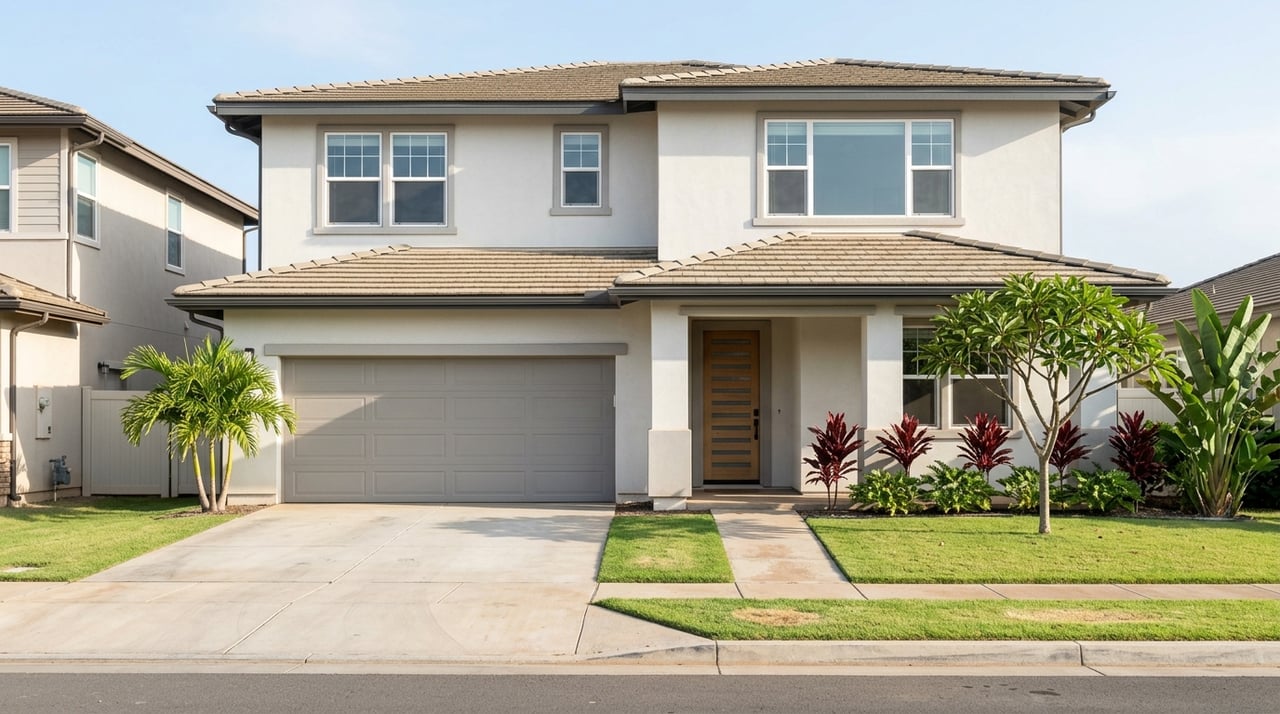
A Mililani Guide for Buyers Ready to Move Up
Pedro Garcia July 2, 2026
Pedro Garcia July 2, 2026
Thinking about moving up in Mililani, but not sure where to start? That is a common challenge when you want more space, a better layout, or a stronger day-to-day setup without leaving Central Oʻahu. The good news is that Mililani gives you several distinct options, from established neighborhoods with a wider housing mix to newer areas with larger homes and more recent floor plans. This guide will help you understand the main pockets, what daily life looks like, and what to check before you make a move. Let’s dive in.
Mililani is one of Oʻahu’s most established planned communities. According to the Mililani Town Association, the community was established in 1968, spans more than 3,500 acres, and includes 15,829 homes across Mililani Town and Mililani Mauka.
That scale matters if you are a move-up buyer. You are not just choosing a house. You are choosing a community with shared amenities, common-area maintenance, design rules, and a strong neighborhood structure that can shape your daily experience.
Mililani Town Association also maintains seven recreation centers and oversees covenants and design approval. For many buyers, that creates a more organized and amenity-rich environment than a neighborhood with fewer shared systems in place.
Mililani is easier to understand when you break it into its main residential pockets. For move-up buyers, each one offers a different tradeoff in home style, layout, and feel.
Mililani Town is the original west-of-H-2 side of the community. It is generally the place to start if you want a more established setting and a broader mix of attached housing options.
The area includes a range of long-standing communities such as Mililani Garden Homes, Mililani Townhomes, Lanikuhana Patio Homes, Fairway Village, and Pine Knoll Villas. That mix can be helpful if you are moving up from a condo or smaller townhome and want more flexibility in price point, layout, or property type.
You may also find that Mililani Town offers a different street pattern and neighborhood rhythm than newer areas. If your goal is an established community feel with more varied inventory, this is often the first pocket to study.
Mililani Mauka is the newer east-of-H-2 side. It is the area many move-up buyers look at first when they want more square footage or a more recent layout.
Mililani Town Association materials and neighborhood data point to Mauka as the newer section, with many homes built mainly in the 1990s and 2000s. Sub-associations in the area include Hampton Court, Northpointe, Nohona, Destiny at Mililani Mauka, Courtyards @ Mililani Mauka, and Hoaloha Ike.
If your current home feels tight, or if you want a floor plan that reflects newer building eras, Mililani Mauka may offer a better fit. It is especially worth comparing if your move-up goals center on bedroom count, indoor living space, or a more updated overall layout.
Launani Valley is a more tucked-away part of the broader Mililani area. It is often grouped with Mililani Mauka in market data, but it tends to feel more secluded than the core Town or Mauka grids.
TheBus Route 503 connects the Mililani Transit Center with Launani Valley, including stops serving Wikao and Launani Valley Park. That makes it a useful option if you want a quieter setting while still staying connected to the larger area.
For some buyers, Launani Valley offers the right middle ground. You stay near Mililani’s convenience while getting a pocket that feels a little more set apart.
Most move-up buyers are not just chasing a bigger house. You may be looking for a better daily routine, more breathing room, easier shopping, stronger recreation options, or a location that supports work and family logistics more smoothly.
Mililani appeals to that kind of buyer because it combines housing choice with a built-in neighborhood ecosystem. Instead of piecing together services across several areas, you can find shopping, recreation, library access, schools, and transit options within the same broader community.
That can be especially helpful if you are moving from a starter home, condo, or townhome and want your next purchase to solve more than one problem at once.
Amenities are a major part of Mililani’s appeal. Town Center of Mililani is a 477,106-square-foot community shopping center with major anchors that include Walmart, Times Supermarket, Longs Drugs, a 14-screen theater, UFC Gym, California Pizza Kitchen, and a Straub Benioff Medical Center clinic.
Mililani also has the Mililani Shopping Center and a Mililani Public Library branch. For you, that can mean shorter errand runs and a more convenient daily routine, especially if you are trying to simplify life while moving into a larger home.
This kind of convenience matters more than people sometimes expect. When you move up, you are often buying for how life works every day, not just for what looks good on a listing sheet.
Mililani Town Association says it operates seven recreation centers. That is a meaningful advantage for buyers who want amenities woven into the community rather than limited to a single neighborhood park.
Recreation Center 1 includes a waterslide, a 25-yard pool, a jet spa, a kiddie pool, picnic space, hall rentals, and classes that include aquatics, martial arts, and mind-and-body programming. That kind of recreation network can support a more active and connected lifestyle close to home.
For move-up buyers, this can be part of the value equation. More space inside the home is important, but so is having places to gather, relax, and stay active nearby.
Mililani has a dense public-school network within the Leilehua-Mililani-Waialua complex area. Hawaiʻi DOE lists Mililani Uka Elementary, Mililani ʻIke Elementary, Mililani Waena Elementary, Mililani Mauka Elementary, Mililani Middle, and Mililani High in the area.
In late 2025, Hawaiʻi DOE also recognized Mililani Mauka Elementary as a National Blue Ribbon School. For buyers who want to understand school access as part of a move-up decision, Mililani offers multiple public-school options within the community.
It is best to verify school assignment and enrollment details directly during your home search. Boundaries and enrollment processes can affect which option applies to a specific address.
If commute flexibility matters to you, Mililani has practical transit infrastructure for a Central Oʻahu location. The City and County of Honolulu operates a Mililani Park & Ride facility, and TheBus serves the area with routes including 84A, PH2, 501, 503, and 99.
Those routes connect Mililani with destinations such as downtown Honolulu, Pearl Harbor, Wahiawa, Kapolei, and Launani Valley. That gives you more than one commute pattern to consider, which can be valuable if your household travels in different directions for work or daily obligations.
Even if you expect to drive most of the time, transit access can still add flexibility. For some buyers, that becomes an important part of long-term livability.
Realtor.com’s May 2026 data shows Mililani with a median listing price of $540,000, 42 median days on market, a 100% sale-to-list ratio, and 165 active listings. Mililani Mauka-Launani Valley showed a median listing price of $559,500 with 37 days on market, while Mililani-Waipio-Melemanu showed $525,000 with 45 days.
Broader Central Oahu was listed at $644,500 with 84 days on market. These figures are most useful as directional context, not as a precise pricing rule, because Mililani’s mix of condos, townhomes, and detached homes can vary a lot by pocket.
For move-up buyers, the key takeaway is simple. You should compare neighborhoods and property types closely, because one part of Mililani may offer a very different value story than another.
Mililani is association-governed, and that should be part of your decision from the start. The Mililani Town Association says its role includes preserving common areas, supporting homeowner quality of life, and consistently applying DCC&Rs to help maintain property values.
That means exterior changes often require approval. Design rules cover items such as concrete and hardscape work, and Mililani Town and Mililani Mauka single-family homes are treated differently in some approval standards.
If you are considering future upgrades, this matters. A fence, driveway change, landscaping project, or other exterior improvement may need review before work can move forward.
Many condos and townhome communities may also have sub-association approval requirements. Before you make an offer, it is smart to verify association dues, exterior rules, and whether the home is part of a sub-association with its own process.
If you are not sure where to begin, a simple framework can help.
From there, compare homes based on your actual move-up goals. Focus on layout, storage, commute pattern, association structure, and how the neighborhood supports your day-to-day life.
Mililani works well for buyers who want more space without giving up convenience. If you want calm, informed guidance as you compare Mililani Town, Mililani Mauka, and nearby pockets, connect with Hawaiʻi Homefront for a steady, local approach to your next move.
Stay up to date on the latest real estate trends.
The Hawai’i Homefront provides expert real estate guidance across Honolulu, helping buyers and sellers navigate the market with confidence, clarity, and local insight.

HAWAI'I HOMEFRONT
4211 Waialae Ave Ste 100 Honolulu, HI 96816