Living in Wahiawa Hawaii: What Daily Life Feels Like
June 11, 2026
June 11, 2026
If you are looking for a part of Oʻahu that feels practical, established, and a little cooler than the coast, Wahiawā often stands out fast. You may be wondering whether daily life here fits your routine, your budget, or your relocation plans. The good news is that Wahiawā offers a strong sense of place, convenient central-island access, and the kind of everyday amenities that support real neighborhood living. Let’s take a closer look at what it is actually like living in Wahiawā.
Wahiawā is located in Central Oʻahu on the Leilehua Plateau, about 20 miles northwest of metro Honolulu. It sits between the Waiʻanae and Koʻolau mountain ranges, which gives the area a distinct inland setting that feels different from many coastal communities on the island.
That location shapes daily life in a big way. You are not moving here for oceanfront branding or resort surroundings. Instead, you are choosing a town with a central position, practical access across Oʻahu, and a long local history tied to agriculture and military presence.
One of the first things many people notice about Wahiawā is that it can feel cooler and more verdant than lower-elevation parts of Oʻahu. Hawaiʻi’s mountain geography creates microclimates, and higher elevation typically brings lower temperatures. With the nearby Wheeler Army Airfield forecast point sitting at 879 feet, Wahiawā often feels more upland than beachside neighborhoods.
That cooler setting gives the town a different rhythm. Instead of a coastal atmosphere, you get a greener backdrop, more of an inland-town feel, and a landscape shaped by plateau views and surrounding mountain ranges. For many buyers, that difference is part of the appeal.
Wahiawā has deep roots in plantation-era agriculture, especially pineapple, and that history still shows up in the town’s identity. Local descriptions point to rustic facades, side streets, and a community character tied to both farming history and long-term residency.
Military influence is also part of the local picture. Schofield Barracks is next to Wahiawā, and the continuing presence of Schofield and Wheeler has helped shape a resident mix that includes military households and longtime local families. If you are relocating because of military service, that nearby connection may make Wahiawā feel especially relevant.
Wahiawā is often best described as functional in a good way. The town’s commercial activity is centered along Kamehameha Highway, where you will find family markets, coffee shops, bakeries, artist spaces, tattoo shops, and casual places to eat across different cuisines.
This is not a place where everything is polished or designed for visitors. It is more about everyday convenience and local routine. That can be a strong plus if you want a community where running errands, grabbing food, and handling day-to-day tasks feels straightforward.
A University of Hawaiʻi community report also noted a practical service base in town, including a library, satellite city hall, fire station with EMS, post office, and other everyday services. There is also a central transit presence, which adds to the town’s usefulness for residents managing regular schedules.
Shared spaces matter in Wahiawā. Community reporting has pointed to parks, a golf course, botanical gardens, and community events as important places where residents gather and socialize across generations.
That says a lot about the town’s lifestyle. Wahiawā tends to feel less centered on visitor activity and more centered on community spaces that residents actually use. If you value places that support routine, recreation, and casual connection, that may be a meaningful part of living here.
Wahiawā has several well-known recreation areas that add to daily life. Lake Wilson, also called Wahiawā Reservoir, is one of the biggest natural backdrops in town. State agencies describe the reservoir area as a public recreation and fishing resource, with the Wahiawā Freshwater State Recreation Area and a launch ramp on the south side.
The Wahiawā Botanical Garden is another standout. It is a 27-acre former arboretum created for sugar planters and is now known for plants that thrive in moderate temperatures. That fits the area well and reinforces the greener, upland character that makes Wahiawā feel different from other parts of Oʻahu.
Nearby attractions also reflect local history. Dole Plantation remains closely tied to the region’s pineapple past, and Hawaii Country Club sits on former pineapple fields. Together, these places help show how Wahiawā blends everyday living with Central Oʻahu history and recreation.
If you are considering a move, the housing picture matters just as much as lifestyle. Census data shows 6,108 households in Wahiawā, with an average of 2.93 people per household. The same data shows that 91.9% of residents were living in the same house one year earlier, which suggests a relatively stable residential base.
The owner-occupied housing rate is 53.5%, showing a mix of owners and renters. That balance can be helpful if you are exploring different ways to enter the market or trying to understand the overall makeup of the area.
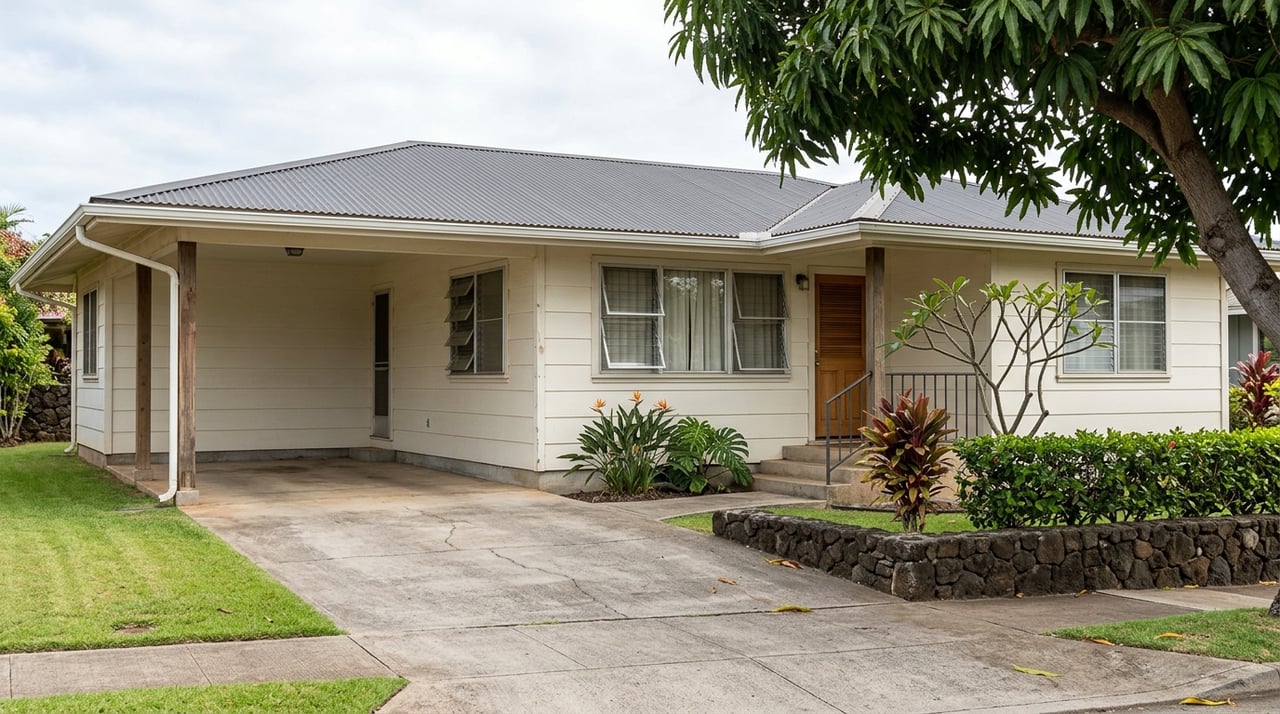
From a style and feel standpoint, Wahiawā reads more like an established market than a brand-new subdivision. Public descriptions of the town mention older facades and mature streetscapes, and the housing mix appears to support that impression. For some buyers, that established character is more appealing than newer but less rooted development patterns.
Wahiawā housing costs should be viewed in the context of Oʻahu as a whole. Census QuickFacts report a median owner-occupied home value of $806,200. Median gross rent is $1,546.
For owner costs, the median monthly amount is $2,980 with a mortgage and $599 without one. These figures give you a baseline, but your actual costs will depend on the property type, financing, condition, and exact location.
For buyers, this means Wahiawā may appeal less because it is a bargain destination and more because it offers an established Central Oʻahu lifestyle with practical value. The draw is usually the combination of character, convenience, and livability.
Wahiawā’s central-island location can be a real advantage if your life takes you to different parts of Oʻahu. Census data shows a mean commute time of 31.7 minutes, which fits with the area’s role as a central residential option for people who drive across the island for work, errands, or appointments.
That does not mean every destination will feel close, but it does mean Wahiawā is often part of the conversation for people who want a practical base rather than a coastal niche. If you need to balance work, family schedules, and island-wide mobility, that central position can matter.
For military households, Wahiawā is often worth a closer look because of its location next to Schofield Barracks and near Wheeler. Official Army guidance notes that housing is available both on and off post on Oʻahu, which helps explain why Wahiawā stays on the radar for PCS and relocation planning.
Beyond location, the town’s established feel can also be appealing during a move that already comes with enough uncertainty. You have local services, a clear residential identity, and a community shaped in part by long military ties. For many military buyers or renters, that familiarity can make the transition feel more manageable.
Wahiawā’s population reflects the cultural mix that many people value on Oʻahu. Census data shows that 28.0% of residents age 5 and older speak a language other than English at home.
That does not tell the whole story of the community, but it does support the idea that Wahiawā is a multicultural place with long-standing local roots. If you are looking for a neighborhood with a lived-in, grounded feel rather than a highly curated image, Wahiawā may line up well with what you want.
Wahiawā tends to appeal to people who want a real-town atmosphere and do not need a beachfront setting to enjoy Oʻahu life. Buyers and renters who value central location, practical amenities, cooler weather, and local history often find something to like here.
It can also make sense for first-time buyers, military households, and anyone looking for an established residential environment with varied housing choices. The lifestyle here is less about flash and more about function, character, and day-to-day ease.
Wahiawā is not trying to be everything to everyone. If your priority is a resort feel, luxury shopping nearby, or constant coastal activity, it may not match your ideal picture of island living.
But if you want a Central Oʻahu community with history, useful amenities, recreational access, and a strong sense of everyday life, Wahiawā deserves serious consideration. It offers a version of Oʻahu living that feels grounded, established, and refreshingly practical.
If you are thinking about buying or selling in Wahiawā, having local guidance can make a big difference, especially if you are relocating from off-island or managing a military move. The team at Hawai‘i Homefront can help you understand how Wahiawā fits your goals and what to expect in today’s Oʻahu market.
Stay up to date on the latest real estate trends.
The Hawai’i Homefront provides expert real estate guidance across Honolulu, helping buyers and sellers navigate the market with confidence, clarity, and local insight.
HAWAI'I HOMEFRONT
4211 Waialae Ave Ste 100 Honolulu, HI 96816